“Global Equipment Monitoring Market to reach a market value of USD 5.08 Billion by 2032 growing at a CAGR of 5.5%”
The Global Equipment Monitoring Market size is estimated at $3.48 billion in 2025 and is expected to reach $5.08 billion by 2032, rising at a market growth of 5.5% CAGR during the forecast period (2025-2032). This growth is driven by increasing adoption of IoT-enabled devices, predictive maintenance solutions, and industrial automation.
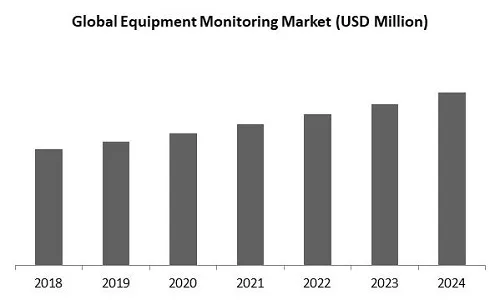
Equipment monitoring involved the use of data capture, sensors, and analytics to track real-time operating conditions of machinery like vibration, temperature, pressure, and performance to enhance safety, uptime, and efficiency across industries such as energy, manufacturing, and utilities. Equipment monitoring has developed from manual, periodic inspections to automated monitoring propelled by industrial automation and digital transformation. Monitoring systems now deliver real-time data through wireless communication, connected sensors, and centralized platforms. Solutions from OEMs like Honeywell and Siemens exemplify this transition, allowing plant-wide visibility and data-driven decision-making that supports predictive and preventive maintenance instead of reactive responses.
Recent trends in the market prioritize IoT integration, advanced analytics, and cloud & edge computing to allow remote diagnostics and predictive maintenance. Platforms such as Honeywell’s connected monitoring solutions and Siemens MindSphere generate real-time alerts, multi-asset data, and forecast possible failures before they can cause downtime. Equipment monitoring is also largely embedded into OEM service portfolios, enabling manufacturers to remotely manage installed bases, create new service-driven revenue models, and reduce on-site interventions. The competition in the equipment monitoring market centers on analytics sophistication, platform capabilities, and ecosystem partnerships, with key market players positioning themselves ahead by converting raw sensor data into actionable insights that reduce costs, improve reliability, and extend asset lifecycle.
The major strategies followed by the market participants are Product Launches as the key developmental strategy to keep pace with the changing demands of end users. For instance, In April, 2025, Emerson Electric Co. unveiled a new dust collector monitoring and control solution to enhance operational efficiency and regulatory compliance. The system provides real-time monitoring, predictive maintenance insights, and automated controls, helping industries optimize filtration performance, reduce energy costs, and improve workplace safety by minimizing dust emissions and equipment downtime. Moreover, In April, 2025, Parker Hannifin Corporation unveiled the SciLog NFF+ PF, an automated Normal Flow Filtration system designed to integrate Pre-Use Post-Sterilisation Integrity Testing (PUPSIT) in biopharmaceutical manufacturing. This compact system ensures compliance with EU GMP Annex 1 guidelines, enhancing process control and reducing operator error.
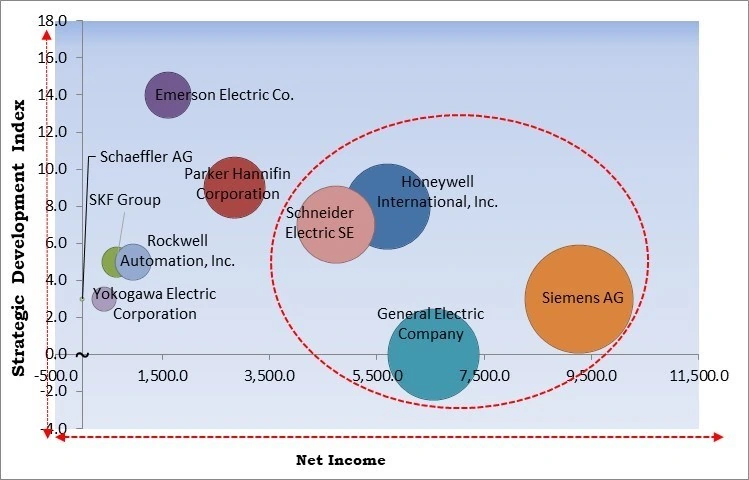
Based on the Analysis presented in the KBV Cardinal matrix; General Electric Company, Honeywell International, Inc., Siemens AG, and Schneider Electric SE are the forerunners in the Equipment Monitoring Market. In August, 2023, Siemens AG unveiled the SIRIUS 3UG5 line monitoring relays, designed to enhance power supply reliability. These relays detect voltage fluctuations, phase failures, and frequency deviations, ensuring system stability. With advanced monitoring features, they help prevent equipment damage and downtime, improving efficiency across various industrial applications. Companies such as Parker Hannifin Corporation, Emerson Electric Co., and Rockwell Automation, Inc. are some of the key innovators in Equipment Monitoring Market.
The COVID-19 pandemic made it much harder for the Equipment Monitoring Market to grow in its early stages. Lockdowns stopped industrial operations and delayed capital investments. Manufacturing, construction, and energy companies worked at less than full capacity or stopped working altogether. Because of this, companies put off new monitoring deployments in favor of more important tasks. Hardware production was already limited, and project timelines were pushed back even more because of problems in the supply chain, such as a lack of sensors, semiconductors, and communication modules. Companies, especially small and medium-sized businesses, put off investing in predictive maintenance and real-time monitoring solutions because they were worried about their finances. Also, restrictions on the workforce and social distancing measures made it take longer to set up, integrate, and train people on-site. Even though remote monitoring became more popular later, the first phase of the pandemic saw projects put on hold and less demand in the market, which slowed overall market growth. Thus, the COVID-19 pandemic had a negative impact on the market.
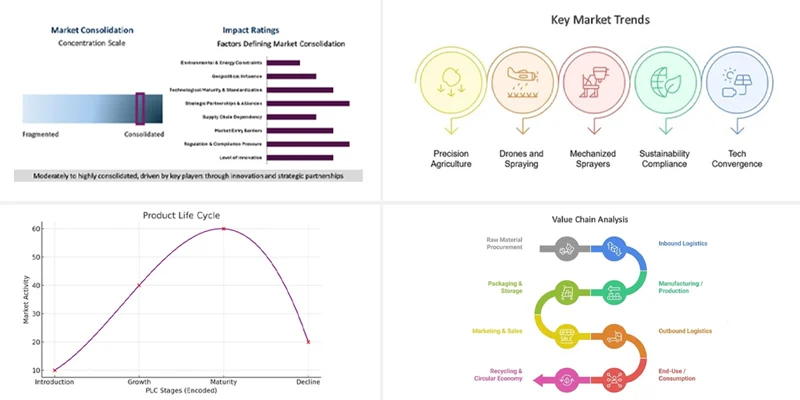

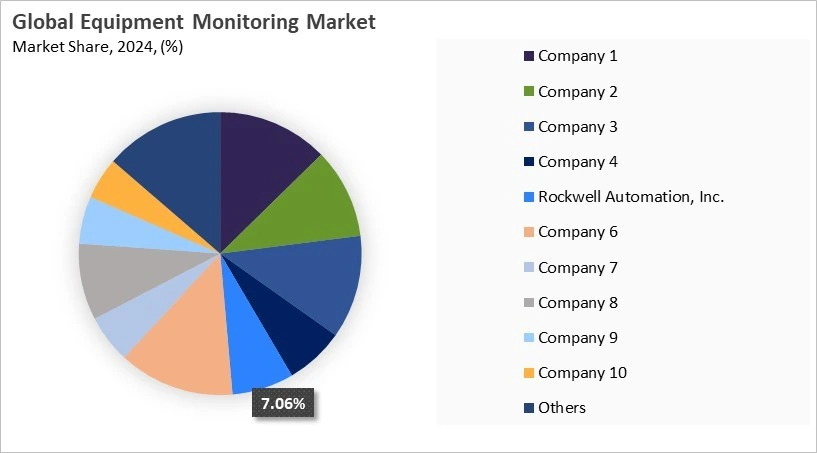
The leading players in the market are competing with diverse innovative offerings to remain competitive in the market. The above illustration shows the percentage of revenue shared by some of the leading companies in the market. The leading players of the market are adopting various strategies in order to cater demand coming from the different industries. The key developmental strategies in the market are Acquisitions, and Partnerships & Collaborations.
Based on Deployment Type, the market is segmented into On-Premise and Cloud. The cloud segment acquired 37%revenue share in the market in 2024. The Cloud segment of the Equipment Monitoring Market represents solutions that are hosted on remote servers and accessed via the internet. Cloud deployment allows organizations to monitor equipment without the need to maintain extensive on-site hardware or IT infrastructure. These solutions typically operate on a subscription or pay-as-you-go model, which can reduce upfront capital expenditure for businesses.
Based on Monitoring Type, the market is segmented into Vibration Monitoring, Thermal Monitoring, Lubrication Monitoring, Motor Current Monitoring, Corrosion Monitoring, Noise & Alarm Monitoring and Other Monitoring Type. The thermal monitoring segment attained 17% revenue share in the market in 2024. Thermal Monitoring involves tracking the temperature of equipment and machinery to ensure safe and efficient operations. This monitoring type uses infrared sensors, thermal cameras, and contact probes to detect abnormal temperature variations that could indicate overheating or component wear. Thermal monitoring helps prevent equipment failure by identifying hotspots early, allowing timely intervention.
Free Valuable Insights: Equipment Monitoring Market Size to reach $5.08 by 2032
Region-wise, the equipment monitoring market is analyzed across North America, Europe, Asia Pacific, and LAMEA. The North America segment recorded 35% revenue share in the market in 2024. The enterprise monitoring market is anticipated to grow at a significant rate in North America and Europe. This is because of widespread cloud adoption, robust IT investments, a mature technological ecosystem, and high demand for real-time visibility and cybersecurity solutions. Canada and the US are showcasing expansion supported by strong adoption of AI-driven analytics, advanced digital infrastructure, and a concentration of key solution providers. Organizations across industry verticals like BFSI, IT & telecom, and healthcare emphasize integrated monitoring platforms to improve operational resilience, optimize performance, and ensure compliance, thereby supporting market expansion. Furthermore, Europe equipment monitoring market is growing at a steady pace. The market is propelled by substantial uptake of enterprise monitoring solutions, supported by strict data protection, focus on digital transformation, and regulatory pressures for compliance and operational efficiency.
The enterprise monitoring market is predicted to capture prominent growth in the Asia Pacific region, driven by digitalization across regional nations, rapid cloud adoption, and expanding SME technology investments. In addition to this, the market expansion is propelled by ongoing IT modernization across the Asia Pacific region. Furthermore, the LAMEA equipment monitoring market is expected to expand at a substantial rate during the forecast period. Some of the elements supporting market growth include improving internet penetration, rising digital infrastructure investments, and regional enterprises adopting cloud-based monitoring solutions to support growth in the regional market.
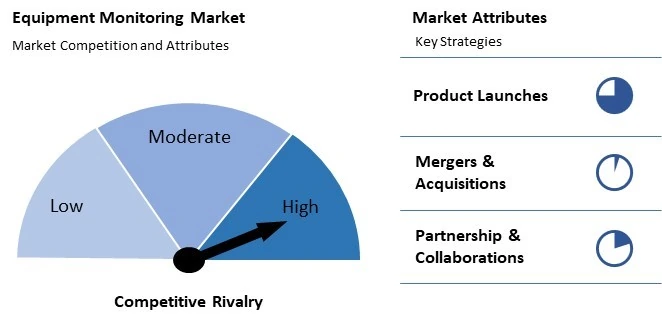
As more companies focus on innovation, cutting-edge technologies, and personalized solutions to set themselves apart, the competition in the Equipment Monitoring Market is getting tougher. To get and keep customers, businesses are putting more and more emphasis on product reliability, integration capabilities, and predictive analytics. To make their presence stronger, market players are also putting money into partnerships, strategic collaborations, and service improvements. The market is always changing and moving quickly because of new technologies and the growing need for real-time monitoring. Companies are always looking for ways to improve efficiency and performance.
| Report Attribute | Details |
|---|---|
| Market size value in 2025 | USD 3.48 Billion |
| Market size forecast in 2032 | USD 5.08 Billion |
| Base Year | 2024 |
| Historical period | 2021 to 2023 |
| Forecast Period | 2025 to 2032 |
| Revenue Growth Rate | CAGR of 5.5% from 2025 to 2032 |
| Number of Pages | 603 |
| Tables | 438 |
| Report Coverage | Market Trends, Revenue Estimation and Forecast, Segmentation Analysis, Regional and Country Breakdown, Competitive Landscape, Market Share Analysis, Porter’s 5 Forces Analysis, Company Profiling, Companies Strategic Developments, SWOT Analysis, Winning Imperatives |
| Segments Covered | Deployment Type, Monitoring Type, End-User, Region |
| Country Scope |
|
| Companies Included | Emerson Electric Co., General Electric Company, Honeywell International, Inc., Parker Hannifin Corporation, Rockwell Automation, Inc., Siemens AG, Yokogawa Electric Corporation, Schneider Electric SE, SKF Group, and Schaeffler AG |
By Deployment Type
By Monitoring Type
By End-User
By Geography
Our team of dedicated experts can provide you with attractive expansion opportunities for your business.







 Unique Offerings