“Global Payment Security Market to reach a market value of USD 96.90 Billion by 2032 growing at a CAGR of 16.9%”
The Global Payment Security Market size is expected to reach $32.46 billion in 2025 and is expected to reach $96.90 billion by 2032, rising at a market growth of 16.9% CAGR during the forecast period (2025-2032). This market is expected to grow because more people are using digital and mobile payments, cyber threats are on the rise, and regulations like PCI DSS and data protection laws are getting stricter. The growth of e-commerce, new fintech ideas, and AI-based fraud detection tools all make it easier for people to keep investing in advanced payment security technologies worldwide.
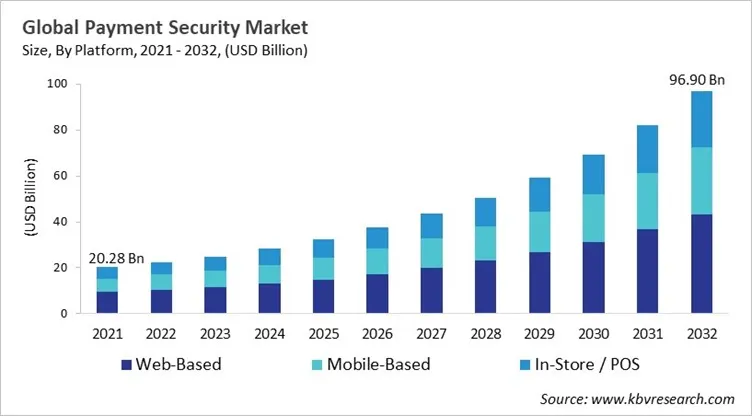
The payment security market has developed along with the digitization of transactions, responding to largely sophisticated cyber threats and expanding payment channels. With the expansion of card-based payments, risks like data interception and skimming resulted in the introduction of standardized protection such as network-level authentication and EMV chip technology, supported by standard bodies and regulators. The growth of e-commerce has shifted security toward digital controls, including tokenization, SSL encryption, and real-time monitoring, guided by frameworks promoted by institutions like the European Central Bank and NIST. Digital wallets and mobile payments further advanced security through secure hardware enclaves, biometrics, and device-level encryption, thereby creating opportunities for payment security market.
Recently, APIs, cloud computing, and real-time payment systems have driven a more intelligence-led security landscape. Further, strong customer authentication, driven by regulations like multi-factor authentication, PSD2, and biometrics have become mainstream, wherein tokenization has developed as a core method for reducing exposure of sensitive payment data. The transition to instant payments has surged reliance on behavioral analytics and AI-driven fraud detection for continuous, real-time risk assessment. Key market providers are positioning themselves ahead in the competitive market through standards-based frameworks, ecosystem collaboration, and security-by-design innovation, working closely with regulators to assure interoperability and compliance.
The major strategies followed by the market participants are Product Launches as the key developmental strategy to keep pace with the changing demands of end users. For instance, In March, 2024, Ingenico unveiled the Axium CX9000, a new all-in-one integrated POS system Designed for seamless transactions. It combines advanced payment solutions with enhanced security and efficiency. This launch reinforces Ingenico’s commitment to innovation, offering businesses a versatile, user-friendly device for streamlined payment processing in various retail and service environments. Additionally, In November, 2024, Visa Inc. unveiled new products in the Asia-Pacific region aimed at improving payment flexibility and security. Visa Payment Passkey using biometrics, and Click to Pay. Visa is also expanding tokenization and fraud prevention with AI-driven tools.
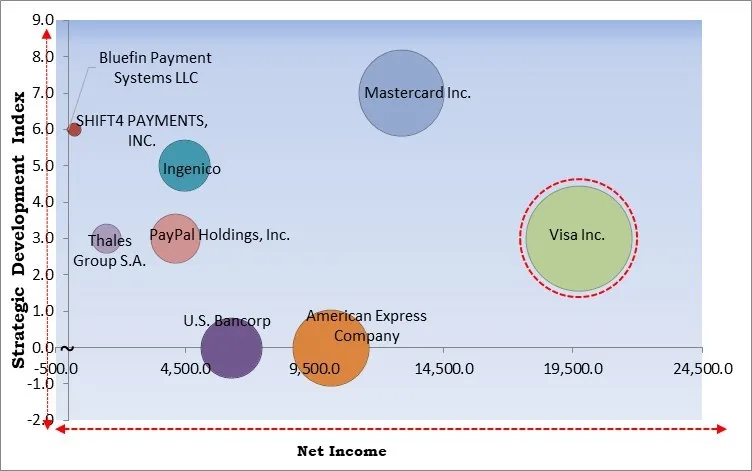
Based on the Analysis presented in the KBV Cardinal matrix; Visa Inc. is the forerunner in the Payment Security Market. Companies such as Mastercard Inc., American Express Company, and U.S. Bancorp are some of the key innovators in Payment Security Market. In February 2025, Bluefin Payment Systems LLC teamed up with Datecs to integrate its ShieldConex Orchestration platform into Datecs' Android-based payment devices. This collaboration enhances payment security by offering tokenization and PCI-validated P2PE, reducing PCI compliance scope. It provides Datecs' clients with flexible, secure payment solutions, allowing them to choose their preferred processor without technical limitations.
The COVID-19 pandemic had a positive effect on the Payment Security Market by speeding up the use of digital and contactless payments. Lockdowns and social distancing made people more likely to shop online, use mobile wallets, and pay with cards, which increased the need for secure payment systems. Businesses had to spend money on better security measures, such as encryption, tokenization, and authentication, as e-commerce grew. To fight rising cyber threats, banks and other financial institutions used AI to find fraud and keep an eye on things in real time. Regulatory focus on compliance made people more likely to use strong security systems that met standards. The pandemic helped the market grow overall and showed how important it is to make sure digital transactions are safe. Thus, the COVID-19 pandemic had a Positive impact on the market.

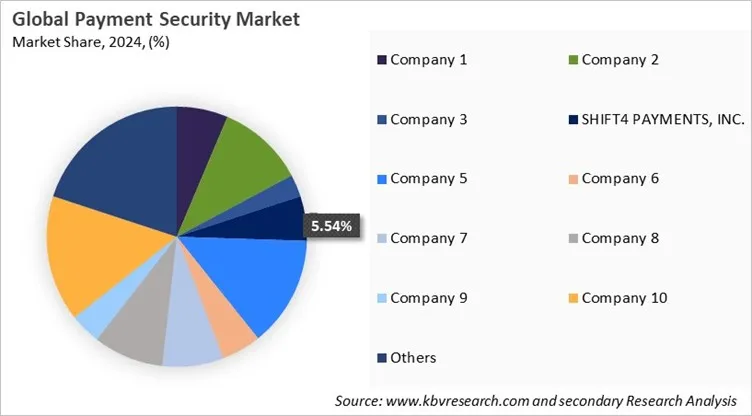
The leading players in the market are competing with diverse innovative offerings to remain competitive in the market. The above illustration shows the percentage of revenue shared by some of the leading companies in the market. The leading players of the market are adopting various strategies in order to cater demand coming from the different industries. The key developmental strategies in the market are Acquisitions, and Partnerships & Collaborations.
Free Valuable Insights: Payment Security Market size to reach USD 96.90 Billion by 2032
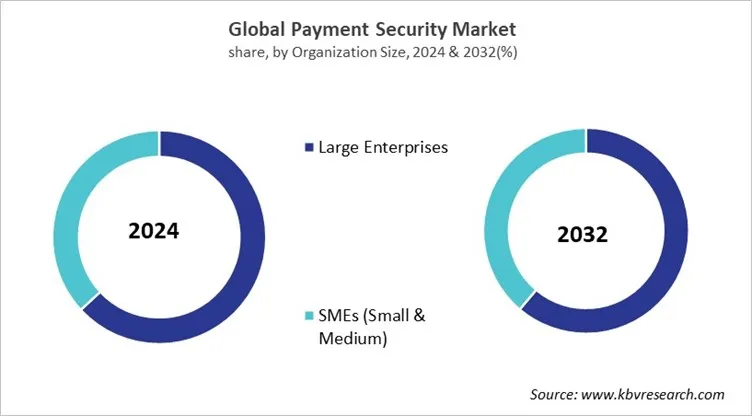
Based on Organization Size, the Payment Security Market is segmented into Large Enterprises, and SMEs (Small & Medium). The SMEs (Small & Medium) segment acquired 37% revenue share in the market in 2024. The SMEs (Small & Medium Enterprises) segment represents a vital portion of the payment security market, driven by the rapid digitization of small and mid-sized businesses and their growing reliance on digital payment methods. SMEs increasingly adopt online payment gateways, mobile wallets, and cloud-based point-of-sale solutions to expand customer reach and improve transaction efficiency.
Based on Platform, the Payment Security Market is segmented into Web-Based, Mobile-Based and In-Store / POS. The Mobile-Based segment attained 29% revenue share in the market in 2024. The Mobile-Based platform segment plays a crucial role in the payment security market due to the rapid adoption of smartphones and mobile applications for financial transactions. Mobile payments are widely used for peer-to-peer transfers, digital wallets, in-app purchases, and contactless transactions, requiring security solutions that operate efficiently within mobile operating systems and networks.
Region-wise, the Payment Security Market is analyzed across North America, Europe, Asia Pacific, and LAMEA. The North America segment recorded 36% revenue share in the market in 2024. The payment security market is predicted to grow at a significant rate in North America and Europe region. This is because of stringent regulatory frameworks, widespread digital adoption, and investment in cybersecurity infrastructure. Canada and the US are leading in implementing tokenization, and robust authentication standards, backed by regulatory bodies like Federal Reserve, the PCI Security Standards Council and FINRA. Furthermore, Europe payment security market is estimated to experience prominent expansion supported by regulatory drivers such as PSD2 and GDPR, surging adoption of data protection practices, real-time risk analytics, and strong customer authentication. Both regions benefit from payment networks, large-scale financial institutions, and technology providers investing largely in innovation, accelerating early adoption of developing security technologies like biometric authentication and adaptive risk models. Standardized frameworks and cross-border interoperability also strengthen the market in both North America and the Europe region.
The payment security market is projected to capture substantial growth in the Asia Pacific and LAMEA regions. This is because of accelerating digital payment penetration, economic development, and regulatory maturity. The APAC market is propelled by accelerated mobile and digital wallet adoption, particularly in India, China, Australia, and Southeast Asia. Central banks and governments across the region prioritize expanding financial inclusion while improving security through real-time monitoring, biometric authentication, and secure digital identity frameworks. Regional partnerships on standards are offering opportunities for regional and global vendors. Moreover, LAMEA payment security market is growing, driven by rising digital payments. Investment in payment security is further supported by urban centers and major financial hubs, with rising interest in fraud detection systems, tokenization, and cloud-based security solutions.
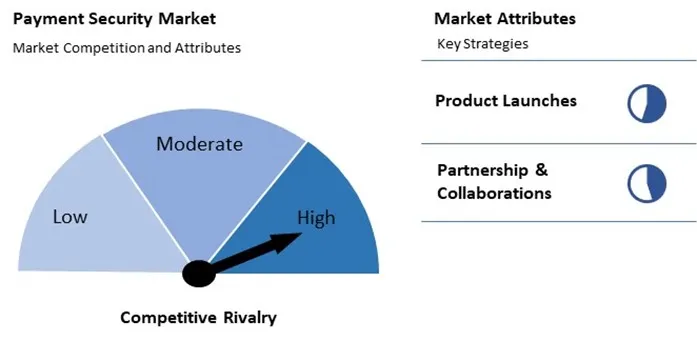
Competition in the payment security market is intense and innovation-driven, with providers striving to develop robust, scalable solutions that address growing fraud and compliance challenges. Key competitive attributes include advanced encryption, tokenization, real-time risk monitoring, and seamless integration across digital payment channels. Emphasis on regulatory compliance, user experience, and interoperability with emerging technologies (such as mobile wallets and API-based systems) further differentiates offerings. Strategic partnerships and continuous product enhancements are essential to maintain market relevance and customer trust.
| Report Attribute | Details |
|---|---|
| Market size value in 2025 | USD 32.46 Billion |
| Market size forecast in 2032 | USD 96.90 Billion |
| Base Year | 2024 |
| Historical Period | 2021 to 2023 |
| Forecast Period | 2025 to 2032 |
| Revenue Growth Rate | CAGR of 16.9% from 2025 to 2032 |
| Number of Pages | 579 |
| Number of Tables | 487 |
| Report coverage | Market Trends, Revenue Estimation and Forecast, Segmentation Analysis, Regional and Country Breakdown, Competitive Landscape, Market Share Analysis, Porter’s 5 Forces Analysis, Company Profiling, Companies Strategic Developments, SWOT Analysis, Winning Imperatives |
| Segments covered | Organization Size, Platform, Solution Type, End-User Industry, Region |
| Country scope |
|
| Companies Included | U.S. Bancorp, Ingenico (Apollo Global Management, Inc.), Utimaco Management GmbH (SGT Capital), SHIFT4 PAYMENTS, INC., Mastercard Inc., American Express Company, Thales Group S.A., PayPal Holdings, Inc., Bluefin Payment Systems LLC and Visa Inc. |
By Organization Size
By Platform
By Solution Type
By End-User Industry
By Geography
This Market size is expected to reach USD 96.90 Billion by 2032.
The payment security market is projected to grow at a CAGR of 16.9% between 2025 and 2032.
Rapid growth of digital payments and cashless ecosystems, combined with escalating cybercrime and sophisticated financial attacks, is driving market demand.
U.S. Bancorp, Ingenico (Apollo Global Management, Inc.), Utimaco Management GmbH (SGT Capital), SHIFT4 PAYMENTS, INC., Mastercard Inc., American Express Company, Thales Group S.A., PayPal Holdings, Inc., Bluefin Payment Systems LLC and Visa Inc.
The Web-Based segment is generating maximum revenue share in the Global Payment Security Market by Platform in 2024; thereby, achieving a market value of $43.33 billion by 2032.
The North America region dominated the Global Payment Security Market by Region in 2024, and would continue to be a dominant market till 2032; thereby, achieving a market value of $33.39 billion by 2032.
Our team of dedicated experts can provide you with attractive expansion opportunities for your business.







 Unique Offerings