“Global Road Safety Market to reach a market value of 14.44 Billion by 2032 growing at a CAGR of 13.8%”
The Global Road Safety Market size is estimated at $5.85 billion in 2025 and is expected to reach $14.44 billion by 2032, rising at a market growth of 13.8% CAGR during the forecast period (2025-2032). The projected growth of the road safety market is driven by increasing government regulations, rising road accident rates, and growing investments in smart transportation infrastructure. Adoption of advanced technologies such as AI-based traffic monitoring, speed enforcement systems, and intelligent signaling solutions further supports sustained market expansion at a strong CAGR through 2032.
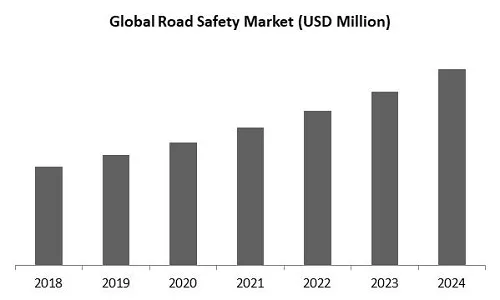
Road safety has developed into a multifaceted component of modern transportation systems, propelled by increasing vehicle volumes, rising mobility demands, and urbanization. The field of road safety has expanded overtime to include vehicle safety regulations such as enhanced structural design, seat belts, and braking systems. With technological advancements, road safety has shifted into a complex ecosystem involving automotive manufacturers, governments, and technology providers. Innovations like airbags, anti-lock braking systems, and advanced driver assistance systems (ADAS) now play a crucial role in preventing accidents, while smart transportation systems allow automated enforcement, real-time monitoring, and data-driven decision-making.
The road safety market is driven by key trends including integration of advanced vehicle safety systems, adoption of digital traffic technologies, and the use of data analytics for proactive risk management. Stakeholders and governments are largely collaborating with technology providers to deploy automated enforcement systems, smart infrastructure, and predictive traffic management tools. Automotive manufacturers are prioritizing safety innovation to meet regulatory needs and consumer expectations. Public awareness campaigns, infrastructure enhancements, and integrated safety strategies further support accident reduction efforts. Road safety ecosystem is becoming more technology-driven and interconnected, with competition centered on regulatory compliance, innovation, and the capability to deliver comprehensive safety solutions that improve mobility and reduce road fatalities.
The major strategies followed by the market participants are Partnerships as the key developmental strategy to keep pace with the changing demands of end users. For instance, In May, 2025, Autoliv, Inc. teamed up with Formula E to promote automotive safety awareness. The collaboration focuses on increasing safety equipment usage, advancing electric vehicle safety technologies, and inspiring careers in safety. Branding and educational initiatives will be rolled out across Formula E races starting April 2025. Additionally, In September, 2024, Continental AG announced the partnership with RAC Connected to offer advanced telematics solutions for fleets, enhancing safety, efficiency, and compliance. Products like ConnectOne and Connect360 provide vehicle tracking, driver behavior insights, crash alerts, AI-based fatigue detection, and dashcam footage, helping fleet operators optimize operations and improve road safety outcomes.

Based on the Analysis presented in the KBV Cardinal matrix; Siemens AG is the forerunner in the Road Safety Market. Companies such as Motorola Solutions, Inc., Continental AG, and Teledyne FLIR LLC are some of the key innovators in Road Safety Market. In November, 2024, Siemens AG teamed up with Roadscor to enhance road safety through advanced simulation tools like Simcenter Prescan and HEEDS. Supporting Vision Zero, their collaboration aims to proactively design safer urban infrastructure, bridging automotive and traffic engineering to identify and prevent potential hazards before construction, ensuring safety for all road users.
The COVID-19 pandemic hurt the road safety market because transportation dropped sharply during lockdowns, which lowered the need for traffic management systems, enforcement cameras, and road barriers. There were fewer cars on the road because of mobility restrictions, which made safety solutions less urgent. Governments put off building new roads and other infrastructure because they needed the money for healthcare and emergency response. Disruptions in the supply chain and temporary shutdowns made it hard to make and deliver important parts like sensors and traffic signals. Operations were slowed down even more by a lack of workers and strict rules. Also, the government couldn't spend as much on road safety programs because of budget constraints and lower public revenues. Because of this, many projects were put on hold, which slowed down market growth during the pandemic. Thus, the COVID-19 pandemic had a negative impact on the market.

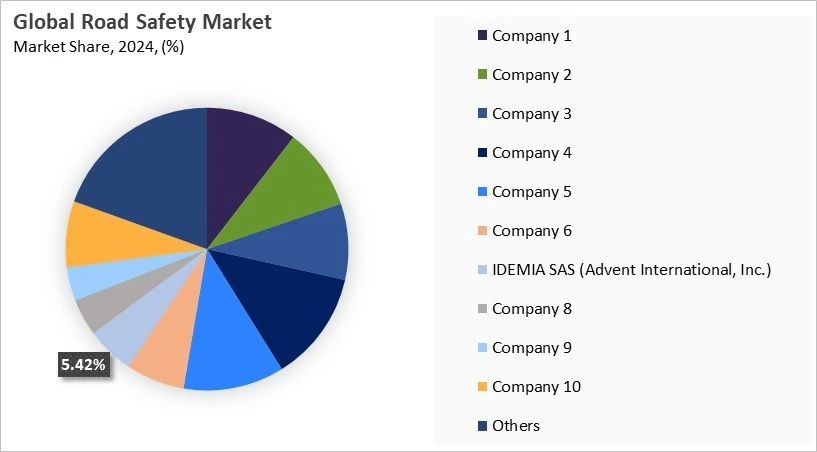
The leading players in the market are competing with diverse innovative offerings to remain competitive in the market. The above illustration shows the percentage of revenue shared by some of the leading companies in the market. The leading players of the market are adopting various strategies to cater demand coming from the different industries. The key developmental strategies in the market are Acquisitions, and Partnerships & Collaborations.
Based on service, the road safety market is characterized into professional services and managed services. The managed services segment attained 22% revenue share in the road safety market in 2024. Managed services involve third-party providers overseeing activities such as real-time system monitoring, software updates, data management, and routine maintenance of traffic enforcement and traffic management systems. Many government agencies and municipal authorities are increasingly adopting managed service models to ensure continuous performance and reliability of road safety technologies without maintaining extensive in-house technical resources.
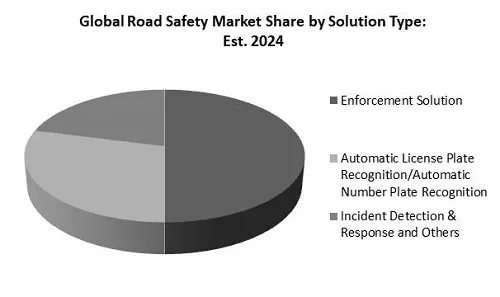
On the basis of solution, the road safety market is classified into red light & speed enforcement, automatic number/license plate recognition (ANPR/ALPR), incident detection & response, and other solutions. The automatic number/license plate recognition (ANPR/ALPR) segment recorded 27% revenue share in the road safety market in 2024. These systems use high-resolution cameras and advanced image processing software to capture and analyze vehicle license plate information, allowing authorities to track vehicles and enforce traffic regulations more effectively. ANPR/ALPR technologies are widely integrated with law enforcement databases, toll collection systems, border control operations, and urban traffic surveillance networks.
Free Valuable Insights: Road Safety Market Size to reach $14.44 by 2032
Region-wise, the road safety market is analyzed across North America, Europe, Asia Pacific, and LAMEA. The North America segment recorded 39% revenue share in the road safety market in 2024. In the North America and Europe regions, the road safety market is estimated to expand at a prominent rate in the forecast period. The market is driven by advanced infrastructure, strong regulatory frameworks, and widespread adoption of smart transportation systems. In North America, governments are investing largely in automated enforcement technologies, smart traffic management, and data-driven safety programs to reduce accident rates. The leading technology and automotive companies are surging the integration of connected vehicle technologies, advanced driver assistance systems (ADAS), and AI-powered traffic monitoring solutions. Moreover, Europe road safety market is predicted to capture a significant market share propelled by strict vehicle safety regulations like rigorous crash testing standards, and mandatory safety features. Nations across the region are implementing Vision Zero Initiatives, focusing on reducing road fatalities through a combination of infrastructure upgrades, public awareness, and enforcement. Further, the European Union’s regulations encourage vehicle automation and safety compliance, thereby supporting innovation and the adoption of advanced road safety solutions.
The road safety market is anticipated to grow at a substantial rate in the Asia Pacific and LAMEA regions. The market is fuelled by rising vehicle ownership, rapid urbanization, and ongoing infrastructure development. Nations like India, China, and Japan are investing in smart transportation systems and smart city projects to manage rising traffic congestion and enhance safety outcomes. Government initiatives promoting surveillance systems, digital traffic enforcement, and safer road infrastructure are propelling market growth. Furthermore, LAMEA is experiencing growth in the road safety market, with growth supported by international collaborations, increasing awareness, and government-led safety programs. Enhanced road infrastructure, investments in traffic monitoring systems, and regulatory reforms are gradually strengthening the ecosystem.

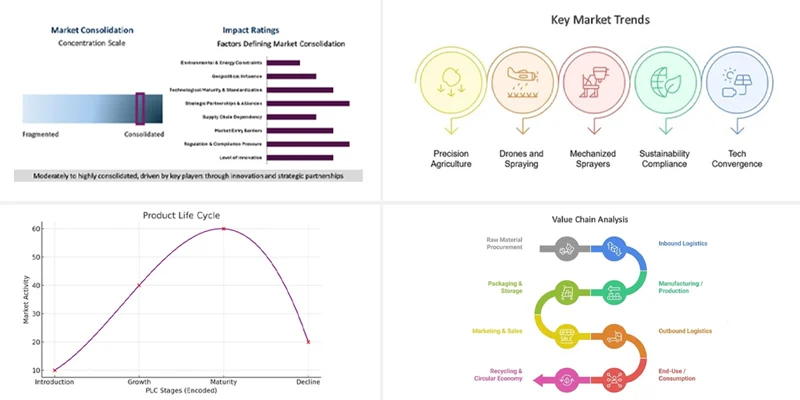
The road safety market is characterized by moderate to high competition, with a mix of established solution providers and emerging technology players. The market shows partial consolidation, where leading participants hold a notable share, while smaller firms compete through innovation and niche offerings. Companies increasingly differentiate via AI-based analytics, integrated platforms, and smart enforcement systems. Strategic partnerships, mergers, and public-sector collaborations are common, intensifying rivalry. However, high costs and lack of standardization create entry barriers, shaping a competitive yet evolving landscape.
| Report Attribute | Details |
|---|---|
| Market size value in 2025 | USD 5.85 Billion |
| Market size forecast in 2032 | USD 14.44 Billion |
| Base Year | 2024 |
| Historical period | 2021 to 2023 |
| Forecast Period | 2025 to 2032 |
| Revenue Growth Rate | CAGR of 13.8% from 2025 to 2032 |
| Number of Pages | 458 |
| Tables | 268 |
| Report Coverage | Market Trends, Revenue Estimation and Forecast, Segmentation Analysis, Regional and Country Breakdown, Competitive Landscape, Market Share Analysis, Porter’s 5 Forces Analysis, Company Profiling, Companies Strategic Developments, SWOT Analysis, Winning Imperatives |
| Segments Covered | Service, Solution, Region |
| Country Scope |
|
| Companies Included | Kapsch TrafficCom AG, Jenoptik AG, SWARCO AG, Siemens AG, Motorola Solutions, Inc., Teledyne FLIR LLC (Teledyne Technologies Incorporated), IDEMIA SAS (Advent International, Inc.), Conduent, Inc., Autoliv, Inc. and Continental AG |
By Service
By Solution
By Geography
Valued at USD 5.85 billion in 2025, it's set to reach USD 14.44 billion by 2032, growing at 13.8% CAGR during 2025-2032.
Professional Services segment dominates, projected to achieve USD 11.02 billion by 2032.
Kapsch TrafficCom AG, Jenoptik AG, SWARCO AG, Siemens AG, and Motorola Solutions hold dominant positions.
High road traffic fatalities, government Vision Zero initiatives, and rapid ITS deployment fuel expansion.
North America leads with USD 5.42 billion by 2032; Europe grows at 13.6% CAGR during 2025-2032.
Red Light & Speed Enforcement leads in 2024, growing at 13.2% CAGR during the forecast period.
Our team of dedicated experts can provide you with attractive expansion opportunities for your business.







 Unique Offerings